Clean Code
Writing readable, maintainable code
Write code that reads like well-written prose using Robert C. Martin's Clean Code principles. This skill equips your AI agent with naming conventions, function design, error handling patterns, and refactoring techniques that make codebases maintainable.
npx skills add wondelai/skills/clean-code --global 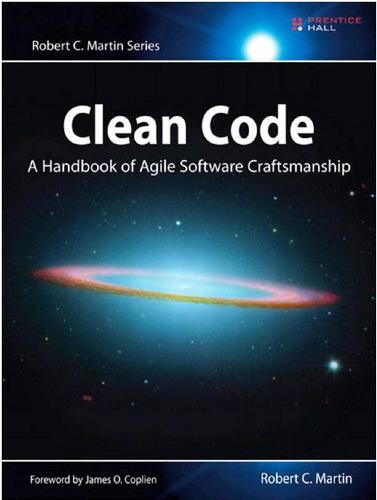
Clean Code Robert C. Martin View on Amazon
02 What it is
What is the Clean Code skill?
Clean Code is a free AI agent skill built on Robert C. Martin's book. It gives your agent the rules that make code readable — intention-revealing names, functions that do one thing, error handling that doesn't obscure logic — and applies them while it writes and reviews, not in a cleanup pass afterwards.
03 Key concepts
Five principles your agent applies.
Drawn from Clean Code — not advice it repeats back to you, but decisions it makes while it works.
04 Fit
When to use it, and
when not to.
four symptoms it fixes, and four it doesn't.
Reach for it when
Your agent writes code that works but reads like it was generated, with names like data2 and 80-line functions.
You're reviewing a pull request and want the naming and function-level problems caught before a human reads it.
A file has grown to the point where nobody can tell what a function does without reading its whole body.
You want a consistent style enforced across a codebase several people (and several agents) touch.
Reach for something else when
The structure is the problem, not the prose. use Clean Architecture for module and dependency boundaries.
You need named, behaviour-preserving transformations with a safety procedure. that's Refactoring.
The code has no tests and you daren't touch it. start with Legacy Code, which gets you a safety net first.
You are trying to reduce interface complexity rather than improve readability. see Software Design.
05 Prompts
Say it like this.
Name the skill at the end of a prompt and the agent applies the framework rather than a vibe. Or say nothing — it loads on its own when a task matches.
Review this module for Clean Code violations and suggest refactors using clean-code skill
Rename these functions and variables to be more intention-revealing using clean-code skill
Break this 200-line function into clean, single-responsibility functions using clean-code skill
Refactor the error handling in this service to follow Clean Code patterns using clean-code skill
06 About the author
07 Same stack
The stack it sits in.
Six Code Quality skills. Most people run two: this one, and whichever fits the next problem.
All Code Quality skills08 Questions
Before you install.
How do I install the Clean Code skill?
Run npx skills add wondelai/skills/clean-code --global. It takes about 30 seconds and needs no account. The Clean Code skill then works in Claude, Claude Code, Claude Cowork, Codex, Cursor, OpenClaw and Hermes Agent — anything that reads the open agentskills.io format — and your agent loads it on its own when a task calls for it. It is free and MIT-licensed, and the source is at https://github.com/wondelai/skills.
Which book is the Clean Code skill based on?
It packages Clean Code by Robert C. Martin — co-author of the Agile Manifesto, 50+ years in software. The skill distils the book's method into instructions your agent follows while it works, covering meaningful names, small functions and comments are a failure. It sits in the Code Quality part of the library.
Do I need to have read Clean Code to use this skill?
No. The skill carries the operational parts of the book — the naming heuristics, the function-size rules, the argument against explanatory comments — so your agent applies them whether or not you can quote them. The book is still worth reading for the reasoning and the long worked examples, which is why every page here links it.
How is this different from the Refactoring skill?
Clean Code is about what good code looks like; Refactoring is about how to get there safely. Clean Code will tell your agent that a function is doing three things and should be split. Refactoring gives it the named transformation — Extract Method — and the discipline of small steps with the tests green between each one. They compose well: Clean Code finds the smell, Refactoring performs the surgery.
Will it rewrite my whole codebase if I install it?
No. Skills load when a task calls for them, and they change what your agent does with the code you point it at — nothing runs on its own. In practice you'll see it most in new code your agent writes and in reviews you explicitly ask for. If you want a sweep, ask for one file at a time and keep the diffs reviewable.
Some of Clean Code is contested. Does the skill take a side?
It applies the book's principles as written, including the strong positions on comments and function length. Those are the parts practitioners argue about most. Treat its output as an informed opinion to push back on, not a linter — if your team has settled on different conventions, say so in the prompt and it will follow yours.
09 Guides that use it
Put it to work.
Long-form playbooks where this skill does part of the job.
One skill, one command.
Install Clean Code, or the whole stack.
npx skills add wondelai/skills/clean-code --global MIT licensed · Claude, Claude Code, Codex, Cursor, OpenClaw, Hermes · No account